

 Spotify
 Apple Podcasts
 Youtube Music
  RSS Feed
 Melissa Love: Trauma, Healthcare Stigma and a Nurse’s Journey Into Recovery Services
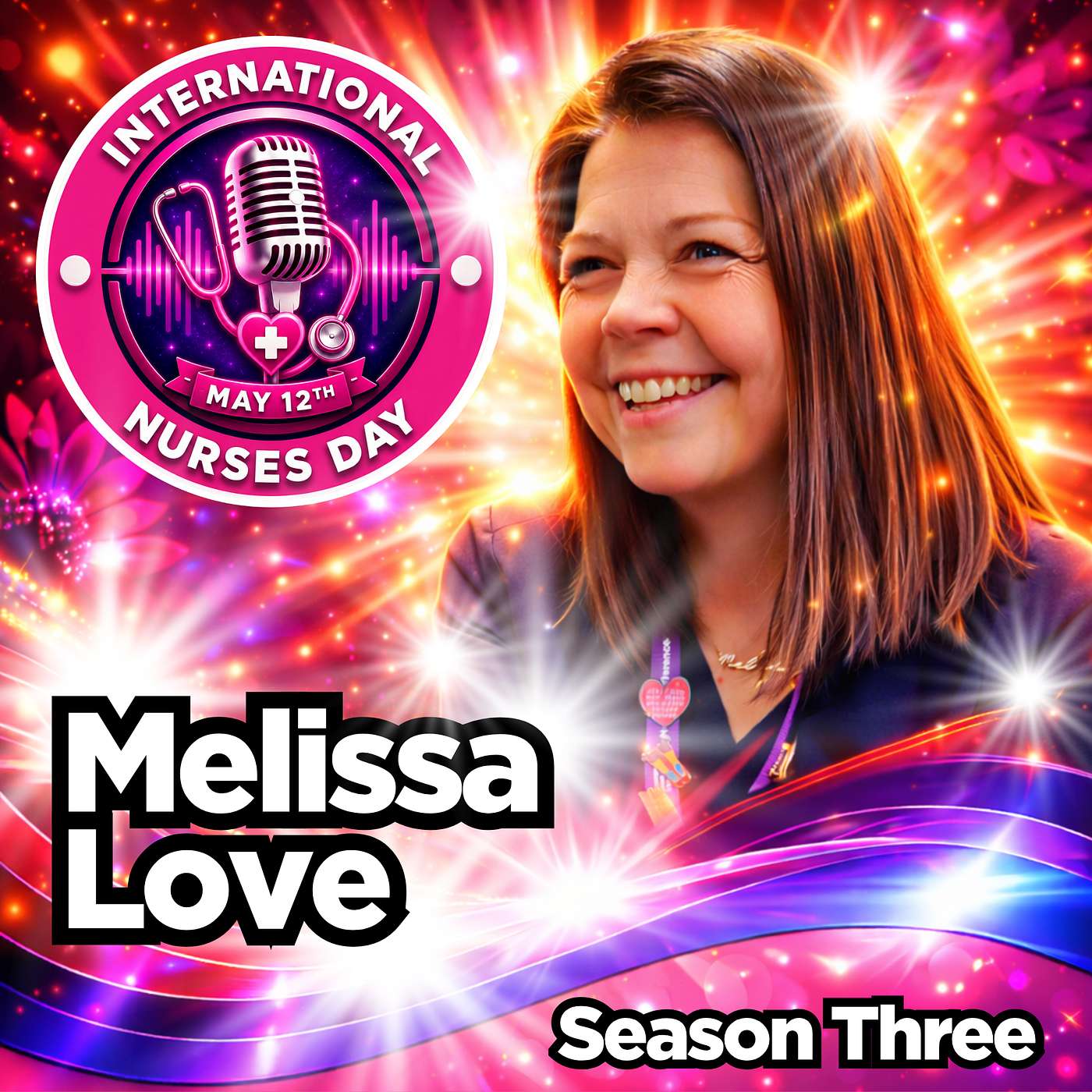

Melissa Love joins Believe in People to share how working as a nurse in addiction services challenged her own hidden fears, internalised stigma and understanding of dependency. Through personal reflections on her brother’s addiction, family trauma and her father’s rejection, Melissa explores how these experiences reshaped her view of recovery, compassion and what real care looks like.
This episode explores addiction recovery, trauma, stigma in healthcare, family dynamics, mental health and the importance of dignity-led, non-judgemental support. Melissa discusses fear, bias, grief, powerlessness, emotional silence and the transformative power of human connection in recovery.
Click here to text our host, Matt, directly!
🎧 If this episode connected with you, please subscribe and review. It directly helps us reach more people affected by addiction, trauma and stigma.
🔗 Then share this episode with someone who needs to hear it!
Browse the full archive at 👉 www.believeinpeoplepodcast.com
Believe in People is a platform for lived experience, recovery insight and honest conversation. Whether you’re in recovery, supporting someone who is, or working on the frontline, this podcast exists to inform, challenge stigma and inspire change.
If you or someone you know needs support with drugs, alcohol, housing, domestic abuse, or mental and physical wellbeing, free and confidential help is available via Change Grow Live:
📩 Contact: robbie@believeinpeoplepodcast.com
🎵 Music: “Jonathan Tortoise” - Christopher Tait (Belle Ghoul / Electric Six)
Listen & Subscribe:
Spotify | Apple Podcasts
🎙️ Facilitator: Matthew Butler
🎛️ Producer: Robbie Lawson
🏢 Network: ReNew
00:00 - Welcome And Guest Introduction
00:37 - First Day Fear In Reception
02:12 - How TV Shapes Stigma
04:22 - Wanting To Save Her Brother
06:14 - Family Dynamics And Emotional Silence
10:11 - A Father’s Rejection And Closure
17:46 - Seven Years Apart And Reaching Out
21:16 - Powerlessness And Family Guilt
24:44 - What Working In Recovery Teaches
29:10 - Human Connection In Healthcare
33:42 - The Funeral And Seeing Stigma Up Close
37:58 - Learning To Truly Open Your Eyes
38:38 - Quick Fire Questions And Farewell
Welcome And Guest Introduction
SPEAKER_00
This is a renewed original recording. Hello and welcome to Season 3 Believe in People, the British Podcast award-winning series exploring addiction, recovery, and the stigma that surrounds them. I'm Matthew Butler, your host, and was I late to say, the officer today. Today's guest is Melissa, a nurse whose understanding of addiction was transformed by both her work and her own family story. We talk about fear, judgment, damage done by stigma, and how media narratives can teach us to see people's addictions as problems rather than human beings. This is a conversation about pre-learning, empathy, and what it really means to look beyond the label. Can you take me back to the day that you came in for your interview here? You've spoken about sitting in the waiting room with service users and feeling like you were out of your depth. What was going on for your mind in that moment sitting in that reception area amongst the people that use these services?
SPEAKER_01
I was terrified, I'm not gonna lie. I have always praised myself being somebody, even from a little girl that used to go to London with spare change in my pocket to give to the homeless. I do not judge anybody whatsoever at all. Don't care who you are, colour of your skin, sexual I it's what I teach my children. But yet on that day I came in for that interview, crapping myself. And I sat there with the service users in reception, and I'm ashamed to say I picked up my handbag and I put it on my knee. And I cuddled it like a teddy bear, thinking someone's gonna nick this. If I leave it on the floor, someone's gonna nick it. And I'm so ashamed to say that, but that's exactly how I felt.
SPEAKER_00
Why did why did you feel that way? I I for the record, I I can understand why people would feel that way. But why did you feel that way specifically as someone who has these values of being so uh open and understanding of people's situation and circumstances? Why did you feel like that in that moment?
How TV Shapes Stigma
SPEAKER_01
I've done a little bit of personal reflecting in nursing, you're actually encouraged to do some um reflecting back on your practice in order to make you better, whether it be a negative, positive, is what they encourage for your revalidation. And when I did some further research into it, I found that quite honestly, society is to blame for that. So you've all seen it the you know, the medical programmes after dark that's you know that's been in Hull Royal Infirmary showing footage of drunken individuals or heavily, you know, intoxicated in what whatever they've taken, with the words over the top of it from the narrator saying so many thousand, so many million is spent on alcohol misuse and drug misuse, and the nurses are being attacked and blah, blah, blah, blah, blah. They're not showing behind that. So that footage of that man that they're showing, you know, kicking off with a security. Why is he kicking off? There's got to be a reason why you're kicking off. Has he been, you know, is the security guard miffed him off in what way? Is somebody not listening to him? Is he in pain? You know, putting that narrative over the top of that says to society, these people are wrong. These people are the reason why you've got the NHS waiting list. These are the people that we need to be, you know, telling off. These are the baddies. Where the good is, they're the baddies because they're messing everything up. Okay. So it's it's all and everywhere that they like to shape it on what we see day to day. That is what I grew up watching. I was watching the medical programmes. Obviously, I wanted to be a nurse, so I was watching the medical programmes, and that's exactly what it taught me. Fear these people, they have one agenda, they're gonna steal from you, they're gonna hurt you, protect yourself, protect your family. These people are scum in a nutshell.
Wanting To Save Her Brother
SPEAKER_00
So it's interesting to kind of have that potential outlook and to look at it that way, but then want to work in a service that is specifically treating people with drug and alcohol dependency. How do those two things, I guess, cross each other then from having that, you know, potential understanding or being indoctrinated in some way from media about you know these people are the villains, to them wanting to come here and support them. Where does where does that link up?
SPEAKER_01
As soon as I saw the job advertisement, I'm very much into mental health, and I always have been. Even my mother said, I'm surprised she didn't become a mental health nurse. And I saw the advertisement and all I thought was my brother.
SPEAKER_03
Okay.
SPEAKER_01
And I just thought, I can save him. If I n if I learn a little bit more, if I can I can do something, I can make a difference. And I had many of a conversation with my family. Are you sure? Are you sure about this? Are you are you strong enough to do you can't save everyone, Melissa? You can't save everyone. You know that, don't you? Yeah, I do know that. But I need to finish work every day knowing that I've done something. I might have said something that made that difference that day. And that's very much what I want to do. It's not just necessarily about the physical health, it's about connection and the mental health all combined into one. So as soon as I saw that advert, I'll be honest, I didn't think I was gonna get it. I'll be completely honest. But as soon as I saw it, I thought, my brother, let's do it for him. But it frightened the crap out of me.
Family Dynamics And Emotional Silence
SPEAKER_00
How how did you uh how did you view your brother then? Because I'm I'm really interested in this is this again, this polarisation of people with addiction being the villains in the way that you you do see on on some of these TV shows, like you said, the The After Dark and 24 Hours in A and E, you do see that. How do you I guess have that or how are you it's hard to say, but how do you believe that messaging that comes from them programmes of of you know the the villains etc and and you know the the the medical staff being the being the good guys and and then having a brother who is in addiction as well, like surely that wouldn't have married up though for you, do you know, seeing that messaging and having that personal experience?
SPEAKER_01
I've I felt poorly of him initially. I saw him walking away from his children, I saw him disappearing for seven years, and I I'm ashamed to say it, but I just thought you're the same initially.
SPEAKER_00
You just saw him as someone who lacked accountability and didn't necessarily understand the root cause of those things.
SPEAKER_01
I didn't I didn't know the backstory. I was just whether it be denial to protect myself, it can't have been anything to do with us. It couldn't have been anything. I I just well, okay, then fair enough, he he's repeating what our father did. He's re Excuse me. He's re he's repeating all of that and I had an anger, but then also a longing that he was my big brother, and in our youth he was fiercely defensive, you know, defending of me. He was my big brother, you know, he would take a baseball back.
SPEAKER_00
Yeah, put him up on the pedestal, don't you? The older sibling, yeah. Understandable.
SPEAKER_01
So yeah, initially he he was and I did fear him initially when he there was one occasion that it was New Year, and my mum said, you know, had him over at our air house and she said I just need a night off, and it turned into much like a babysitting thing, of which he came over to our house for us to like babysit him. And I'd done a little bit of research at that point, I knew that you couldn't just stop drinking, and with it being New Year, I thought, okay, so you know, he had a couple of drinks and everything with us, but I took my handbag upstairs that night.
SPEAKER_00
Yeah, so even the the even that the stigma then that you're you're thinking your own brother might even steal from you to to fund his substance use.
SPEAKER_01
Yeah.
SPEAKER_00
It's interesting that that you and your brother grew up in the same household and experienced that same family environment because we do often look at those sometimes those early childhood years as potentially being the triggers for an addiction. But thinking about how you both grew up in that same household and and looking back now, how do you understand the way your paths ended up being so different?
SPEAKER_01
I honestly believe I'm a very vocal person. You know, I wear my heart on my sleeve very, very much. You know, if if I can help anybody or whatever, I just say it. This is why counselling's never worked for me, because I tell everybody anyway. It's not like I'm hiding something. I have my heart on my sleeve. My brother was very different. He found it difficult to discuss his emotion. He took, you know, he was a lot more quieter than me. I was jazz hands on the stage somewhere, look at me, look at me, I'm absolutely fabulous. Whereas he was, now I'm just gonna add behind here, I'm just gonna be really quiet. And I honestly believe now from working with those individuals with substance misuse in somewhere, that they are the most genuine feel things very, very deeply, individuals. And when you feel things so incredibly deeply, you need something. You need something to manage that. If you're unable to regulate it, if you're unable to verbalize it, you need something else. And I honestly feel that ones may well have started off as something quite recreational, then turned into the dependency that he worked out that it was working for him, that he was able to function day to day because of it.
SPEAKER_00
Do you do you think gender roles come into that at all? I think it's quite stereotypical. Men keep their things to themselves, we don't talk about our problems. And you you mentioned you you said it quite you said something about your father. Like, oh he's just like he's just like my dad. Tell me a little bit about the relationship between I suppose what what what your father brought into that home and how maybe that was perceived very differently between yourself and and your brother.
SPEAKER_01
To be perfectly honest, my mum was more the cuddly person, my dad wasn't. I desperately desired my dad's attention in any which way, shape or form. I really, really did, and so did my brother, very much so. But I was different. I'd call, crawl on my dad's knee if I wanted a cuddle. He couldn't. He couldn't do that, he was unable to do it. But if I if I demanded a cuddle, I would get a cuddle from him. I was constantly told as what was my brother that we was not good enough, we was the underachievers, our other siblings, ha um sorry, half siblings from the previous marriage, they were superior, they got the better job, they got the better qualifications, we was going to amount to absolutely nothing.
SPEAKER_00
That's interesting to have that from your your previous relationship. Oh, I I mean you sometimes see it in the case that it's often that parents forget about their old families and they've got a new one and suddenly the new family takes the precedent. But it sounds like the old family took priority over yourself and your brother.
SPEAKER_01
It's certain it's certainly how we felt, but we was brought up under the understanding that my half-sister and my half-brother, there was brother and sister. So it was never half-sisters, you know, anything anything like that. They were just our siblings. But even my sister used to join in with it saying, I'm the A-star student, Mel. You're the C. I didn't know at the time I was dyslexic and ADHD. So of course I'm not gonna be as high flying as as what she was. And so for me, in my entire life, I was just underneath my brother. He was academically quite quite clever. But of course, because of his recreational use and people that he hung around with at school, he never achieved potentially where he could have gone if he would have knuckled down, whereas I was genuinely trying. But I just couldn't do as well as what he could naturally. Just couldn't.
SPEAKER_00
Do you still have a relationship with your dad?
SPEAKER_01
Um he's died now.
SPEAKER_00
Okay.
SPEAKER_01
And when I was 25 years old, I gave uh my mum and dad had separated at that point. Been together 30 years, had separate separated, and I was trying desperately to keep a relationship open with my dad. And I rang him up one day to tell him really handsomely that I'd cut my grass because he was a landscape gardener, yet again I was trying to dad look at approval, yeah. I've cut my own grass. And he simply turned round and said, I don't need to speak to you or your brother anymore, want nothing to do with you. Didn't give me an explanation and I just said, Why? He said, No, I'm not there's no explanation, and just put the phone down on those. I rang my Yeah, I rang my brother automatically and said, This is what dad's just said to me. His first reaction was, Are you absolutely losing your mind? He rang up my dad and cut my dad confirmed exactly the same thing to to my brother, and my brother kicked off at him say, you know, and in his words to me, like, you know, afterwards, I'm more angry for you because every girl needs a dad, I don't need a dad, I don't need this, I don't need that. However, more more recent conversations, he did. He did need a dad, and he, you know, he's told me multiple stories in regards to times and what he just wanted to be manly like dad. But yeah, from from that moment on he didn't talk to us. I'm now 43, and last year, literally just as I started this job, I get a phone call to say his end of life, he's actually had cancer, didn't want anybody to know. My half-brother had said to him, Shall you know, shall we let Melissa come because Melissa very much w still wants to see because I've tried to write letters and everything over the years. I've even had the foot the door thrown in my face from going to the door to see him, and he's n never never engaged, and as I said on his deathbed he said no. But when it came to his funeral, just as I started working here, I thought I'm going. And so I did, and that was actually the first time that I saw my brother after seven years of absence at my dad's funeral.
SPEAKER_00
Okay. Y your brother with the addiction.
SPEAKER_01
My brother with the addiction, yeah.
SPEAKER_00
Okay. Did your dad keep in touch with the other?
SPEAKER_01
Yeah.
SPEAKER_00
Interesting. Yeah. And you still have no explanation as to why he cut you out?
SPEAKER_01
The e the only explanation that I've heard around the grape van is that we looked too much like my mum. Now, whether that'd be right or not, I mean it's just ludicrous. I mean, how how any parent, father or mother can walk away from their children. And I can tell you I can tell you now, even at 25 it hurts just as much as what you would be if you were at nine, ten years old. And particularly with my ADHD, ruminating thoughts, the constant you're not good enough. I mean, I've got a tattoo now saying I'm good, I am enough, just to try and have that constant reminder. Because when somebody tells you that so often you start to believe it.
SPEAKER_00
Yeah. My my daughter looks nothing like me. My DNA didn't even try. She is my wife's double in every way. If I look at childhood pictures of my wife, it just looks like my do you know again, like saying it was like I wasn't even present, do you know what I mean? Um but like the I'm just trying to put myself in that position. I I'd got not a chance in hell would I ever cut about my life for any circumstances.
SPEAKER_01
No. I mean, like when we were young, when when when I got to be a teenager and I had conversations with my mum, said, you know, why don't my dad give me a cuddle? You know, why why this, why that? And she said to me, Well, he was sexually abused as a child. Okay, so there's so like you know, trying to give like a rationale. But then in saying that, I know a lot of people who have had sexual abuse, physical abuse, and they don't abandon the children. Even well, I say children, we were 25, but we were still children.
SPEAKER_00
You're still there, you're still you're still his children.
SPEAKER_01
Absolutely that.
SPEAKER_00
That's that's it's interesting, and and it's I suppose what's what's harder with this is that there are questions now for you that will naturally go unanswered forever. You will never get it's almost like you will never get that closure in which you need.
SPEAKER_01
I got my closure. I wrote a very, very long letter, and I vocalized everything that I wanted to say, and I went to see him in his coffin, and I just read out everything, and it wasn't a slanging match to my dad. It was a you gave us this, and these are the experiences that I remember. You provided this, you provided that, but then I'm never gonna forgive you for X, Y, and Z. And now I'm walking away from you rather than you walking away from me, I'm walking away. And I hid it in his whole Daily Mail newspaper that he that he had, because he always had a newspaper every day. And so my step siblings would never find it, so they wouldn't want to remove it. I hid it. So I know perfectly well that his cremated remains was with that layer, and that is my closure.
SPEAKER_00
Going back to seeing your brother for the first time in the in the seven in the seven years, thinking about his relationship with with substance misuse, when did you first realise that his relationship with alcohol and drugs had moved beyond that normal experimentation and had become something much more serious? Was it when you sort of rekindled that that relationship when you saw him after that seven years, or did you know prior to that?
SPEAKER_01
I knew prior to that he'd um come to us and actually said he was visiting renew. He was coming here. I didn't even know where this place was, not gonna lie. And he was coming here for some treatment. He ended up in hospital at one point, completely jawned us. Completely jawned us, and uh he disappeared for a little bit before that point as well, and I was notified he was in hospital, so I turned up at the hospital, and he was like a frail old man, completely jawned us. But things were picking up, he obviously was detoxed in hospital. He was got back with his ex-partner, the partner to his youngest son, and things were going well, you know. He was going round, and then this massive explosion happened, an argument between them both, of which it turned out that he'd started drinking or something and hiding it. I only heard his partner's side of the story at the time. So yet again, I felt low on him. Sure, thought you've been drinking, you've been doing this. I've since learned that there was actually there was a weird.
SPEAKER_00
Was that the reason for not seeing him for seven years? Did he did he cut you off or did you cut him off? Okay, so yeah, he cut you guys off. And was that because he felt he felt judged because of his addiction problems from you as a family?
SPEAKER_01
It he just completely just after that explosion that happened, he left his partner's house and he disappeared.
SPEAKER_02
Okay.
SPEAKER_01
After that, literally from that com that disagreement there of which I knew that he was with this other woman in Bridlington, and that's all I knew. I tried to contact him multiple times on social media, because he still had me as a friend on social media and he never responded. He read the messages, but he never responded. I every birthday and every Christmas, I thought, I don't want you to think I've given up on you.
SPEAKER_00
Okay.
SPEAKER_01
So every birthday, every Christmas, I reached out every single time. Tried to, you know, and then when I started working here, I messaged him, I'm starting to see things differently. I want to apologize for this, I want to apologize for that. I'm here to support you whenever you're ready. Just let me know when.
SPEAKER_00
What was you apologizing for?
SPEAKER_01
For being a bitch. For judging him, for not looking past well for being the same as most people in society, I'm sorry to say. For for being that he needed a lot more and I was immature and I wasn't well educated enough to give him that at the time. Okay. So I was Yeah, I was just trying to say to him, This is what I've learned, you don't need to be frightened anymore when you're already here here I am.
Powerlessness And Family Guilt
SPEAKER_00
Yeah. I suppose being a a sibling of someone with an addiction or being a parent, being a friend, being anybody close to someone, there must be an element of feelings of powerfulness, powerlessness in order to support them. What does that powerlessness look like in in everyday life for you and your family as well?
SPEAKER_01
My mum ended up on antidepressants. She just couldn't cope.
SPEAKER_00
Did she blame herself in some way?
SPEAKER_01
She blames she still blames herself to this day.
SPEAKER_00
Okay.
SPEAKER_01
Continuously blames herself, of which I've had to say there's no one to blame here. It's it is what it is. Yeah, my dad was a factor. But I'm sure multiple other things was a factor as well. You know Blame is it blame doesn't matter.
SPEAKER_03
Yeah.
SPEAKER_01
It is where we are now and how do we deal with it now. But she still very much believes that she should have been a better um mother, that she could have done more. In some way. Which is really sad.
SPEAKER_00
It is, yeah, because I I think it is I I often talk about this, but like thinking about my my own relationship with with my daughter. Now she's recently just started going to a preschool, and it's interesting to see those external influences now influencing her. Yeah. Whereas prior to that it was just my influence and my wife's influence and that of our immediate family. I I guess it it's it's always hard for as a parent to to look at this and think, well, it must be something I did when sometimes, as you said earlier, there was this recreational use, and that could have come from his peer groups. It it but very much trying to impress, that wanting to fit in. It's hard to say because we're not here to discuss this this is your story. Do you know what I mean? It's hard to say what what caused that relationship with substances for him. I mean, we can start to piece things together the lack of relationship with a or the lack of a father figure in his life in the way that he maybe wanted him, that lack of love. And I think when we talk about um the training in which we deliver with volunteers, we talk about Maslow's hierarchy of needs, and at the very bottom of that, we talk about the the need to be loved and to be cared about. And if that basic need isn't being met from someone that your brother sees as an important part of his life and his dad, you're not going to move up that ladder to you know self-actualisation, uh so to speak.
SPEAKER_01
My brother turned round to me once through conversation, and we've had multiple conversations obviously since, and he mentioned about my brother-in-law coming round to the house on a Sunday, who was always the same, you know, thing the brother-in-law run his half-sister coming round to the house. And every Sunday my dad would pour him a glass of Southern Comfort and give it to my brother-in-law. And when my brother turned 18, he sat there in the living room and he waited for what that one glass of Southern Comfort, because to him that was an acceptance.
SPEAKER_00
Yeah.
SPEAKER_01
You're welcomed into the team, he never got that glass of Southern Comfort.
SPEAKER_00
Interesting.
SPEAKER_01
So when you look at it from that perspective, you think, wow, you believe that that Southern Comfort had, you know, an acceptance it had. Is that the reason why you in you enjoyed a glass of Southern Comfort? I don't know. You can start to overthink it, maybe. But it it's me trying to look into the psychology behind it to think, right, okay, so how did we get here? But it's so incredibly sad to think that one little simple action, my dad could have given him that glass of southern comfort and he would have.
SPEAKER_00
And that could have maybe changed everything, yeah.
SPEAKER_01
Absolutely. Could have.
What Working In Recovery Teaches
SPEAKER_00
It could have changed the entire trajectory of his life because of the there would have been that feeling of acceptance. So when you started working in substance misuse services, what did you begin to understand about addiction that you'd you'd not seen or understood before? It's obviously been a massive learning care for you being in these services. What are some of the main things that that being here has taught you that you maybe didn't what did you do prior to being here? Did you work on a ward or?
SPEAKER_01
I did I uh when I first qualified, I worked as a community nurse. So primarily I was working with the elderly, lots of wound care, okay, a lot of end-of-life patients, you know, syringe drivers and whatnot. But then I went into commissioning, so I dealt with a lot of very complex assessments. But to me, I needed something more, as I say, I'm more mental health driven. I I feel as if that mental health really does get pushed under. I I think it they're just as important. You can you can bandage up a purley, you can't you you can't just bandage up your head, you know, it's a lot deeper. So I was looking for something else, and I wouldn't think of doing anything else now. Yeah. Honestly.
SPEAKER_00
I just I just So it it it's kind of the there's a similarity there, because it's not that you've been on the wards. No. So what have you learnt specifically about substance misuse and addiction that that you hadn't again seen or understood before then? As I say, people Mental health obviously been a big part of it, yeah.
SPEAKER_01
Mental health is my god, you've you don't find somebody with substance misuse who doesn't have an element of some mental health decline of some sort. And honestly, if I can be they're the nicest people I've ever met in my life. I I don't have to open a door when I'm here. Our service shoes has opened the door for me. They are love, they are love. I don't feel threatened, I feel completely safe. You know, if someone's shouting at me, I'm not scared to back away, and I I come back forward, I'm not frightened anymore. They are the most genuine people that you'll ever meet in your life, and so that's why it angers me that I was sat there originally, with that perception, with that perception, absolutely that so that's what I've learned that I mean that you don't have to come from yeah, we have a lot of people coming forward with trauma and horrific things that have happened to them, absolutely horrific, and of course they're gonna use in order to dull that, but not always.
SPEAKER_00
It comes back to that again. We we talk a lot about trauma-informed practice, don't we? And I've heard it said many a times that a lot of the people that we work with good people who've just had a terrible life. And I completely understand that because my experience, I had to do something with the local news recently, and they were asking me questions about should people feel scared when they're when these these people are hanging out in groups, and I'll say, Look, I'm not gonna tell people whether they should be scared or not. How everybody feels is completely their right to feel that way. But based on my experience, and then we had that conversation there, and again, said that a lot of these people are good people that have had bad lives, you know. So I I get why people may feel that way, I understand it, but again, challenge that stigma, talk to people. Again, we always say this on this series, especially everybody has a story.
SPEAKER_01
Yeah.
SPEAKER_00
What is their story?
SPEAKER_01
I had a service use her only come to me yesterday, and she was sh I was really struggling to get her to engage and she wasn't even looking at me until I managed just to get her eye contact. And it turns out that in her point of view, not a single professional has listened to her, they don't understand, no one's helping her. And so it's just that intervention of I'm so sorry you've gone through that, and that is how you're feeling it's valid. I can't talk about that, but I could we can sort this out now, and this is where we're making it. Absolutely not, and and of course there's different perceptions, so we we don't know that, do we?
Human Connection In Healthcare
SPEAKER_00
Of course, yeah, just because it's been perceived in that way doesn't necessarily mean it is that way. So, from my understanding, your brother, you know, again is is back in your life now, as you've said, you you you're communicating a lot more. You've both been through so much. What do you hope that families maybe listening to this episode might take away from from your own personal experience here and and experiences I want everyone to get something out of today's podcast, if I'm completely honest.
SPEAKER_01
If you're a service user, I really, really, really want you to hand it over to your family, just turn it on for your family to listen to. Because it's really important for families to listen to it or pe not even families, people surrounding that individual, for them to know that knowledge is power.
SPEAKER_03
Yeah.
SPEAKER_01
And feeling powerless is completely natural. They can come to us here at Renew for us to give them more information in order to help them feel more in control, but then to help the service user as well. So get that information, talk to the service user, start gaining that information. As a nurse, it's been, you know, I've been forced or somewhat into this environment in order for me to learn that it's something naturally that we might not be able to do in day-to-day life. But we're here as a service to help everybody, not just a service user. If they are a service user, you know, at the end of the day, we are here to support you. No judgment here. The amount of service users that we have walking in through our doors on a daily basis with self-harm marks that are that deep that they've got infected, that because they haven't been over to the hospital because of the way that there was treat last time.
SPEAKER_00
Yeah. You know those cultures and attitudes from professionals are so important, aren't they?
SPEAKER_01
Absolutely. And and and I get it when they're walking through the door and they look at me, I get it. Those they see me in the uniform and they think, I've I've had There's the barrier, I think. Yeah, there's the barrier that you know I had one person say to me, I was expecting a matron when they came in ready to but I you know I'm putting on good voice for this podcast. You know, normally I'm quite blue in in how but when I'm talking to people, if they're gonna swear, I'm gonna swear back.
SPEAKER_00
It's about connecting on their level, isn't it? Absolutely.
SPEAKER_01
So therefore, I'm not better than them, they're no better than me. Let what we're on here on a mutual ground.
SPEAKER_00
Yeah. So I do remember I I remember getting pulled up for my my language. One of the managers here years ago had overheard my interaction with a service user, and I wasn't cussing at them. No, I was just in in the conversation, do you know, part of the conversation? I was just talking how I would talk, and and I completely understand the professional element that we need to portray, but I also think at the same time, sometimes that that basic human connection of me just being me provides a genuine article for that person to then be genuine in return.
SPEAKER_01
Absolutely.
SPEAKER_00
So it breaks down that barrier. I think there's nothing wrong with a bit of a blue conversation. Do you know what I mean?
SPEAKER_01
And honestly, I've had service users one of them, like for Christmas, bought me a button that you press it, it says bullshit, bullshit, because she thought it was good that I was able to curse, and you know, it makes there's a perception of nurses, doctors, etc.
SPEAKER_00
The we're from the middle class and you know holier than no, yeah, all of that sort of stuff.
SPEAKER_01
I'd you know, yeah, I was brought up in a in a well-to- considered a well-to-do area. Yeah, I was. But I'm a common as mug, you want to believe it. And you know, is it a miracle on how I got through a nursing degree? Absolutely. But here we are. And I don't want them to feel intimidated by me. Of course, yeah. I want them to come back to me and that they're safe with me. And that would be my word to medical professionals as well. Not all of them, can't speak for absolutely all of them. But when you see somebody, when they're presenting AE, when they're presenting your ward or your treatment room, wherever it may well be, don't look at the addiction, don't look at that side of things. Why have they come to you? Have they got a wound? Have they got this? It was a conversation I had with my brother in his most recent hospital admission, of which he says, There's not a single person in this room that knows about my addiction. And I said, And how does that make you feel? And he says, Brilliant, because they're treating me like a human being.
SPEAKER_00
Yeah, because he's not there for a substance misuse-related issue. Absolutely. It's a shame that, isn't it?
SPEAKER_01
It's a massive, massive shame.
SPEAKER_00
That they that they that this that it's just so noticeable. Yeah. Do you know when presenting with an issue that is obviously related to their substance misuse being treat in such a way.
SPEAKER_01
The day I picked up my brother to take him to my dad's funeral, he was a shadow of a man, and he was vomiting into a courier bag because his body was rejecting the alcohol all the way up to the funeral. It was the first time I'd seen him in seven years. And when we got there to the funeral, I stood there by his side as him in the wheelchair, and not a single person from the family came up to say hello. The ones that did come up to say hello spoke over him. Of which I had to direct their attention down saying this is Jamie. Oh sh sorry, oh I'm so sorry, I didn't I didn't even know it was you. So that is going to his dad's funeral, is already so brave to do that. He was brave to get in contact with me to say, Mel, I want to go to the funeral. He was brave to see me for the first time in seven years. He was brave to turn up at a funeral knowing that the anxiety he must have felt that morning. Immense. And yet people were talking over him. That that pissed me off. I'm not gonna lie. Because just because he's in a wheelchair, just because he is looking very vulnerable, don't look down on him. And so if very quickly the rules did change. There, once upon a time when he was when I was a y young lass and I was getting bullied, he rocked up with a baseball bag.
SPEAKER_00
You were able to protect him in that moment.
SPEAKER_01
How was it you know, and but then you look at it from the other perspective of would he have wanted that? Is that was that demasculate? Is that the right word? No, yeah, demasculating for him, was you know, did that put him down? All I just thought is you're my brother, and I'm gonna protect you to the end of the earth the same way as what he would do.
SPEAKER_00
Yeah, no, I appreciate it. And thank you for thank you for sharing, you know, so much of your story. And it's interesting to see your professional development that's come through just by being exposed to it. And I think this is why this podcast is is so important to to myself and and obviously to Robbie as the producer, because I've said for years if people got to know the people that use these services as individuals, their perception would change.
SPEAKER_01
They are the most wonderful people ever. You could get the most wonderful stories. When I first started here, I wanted to learn more because I'm not gonna lie, I felt a little bit um an outsider.
SPEAKER_03
Yeah.
SPEAKER_01
Well, because there's a lot of lived experience working within the, you know, with within renew, and I thought, my god, I've been left outside the party, you know. So I started to listen to your podcasts.
SPEAKER_02
Thank you.
SPEAKER_01
Is that alright? I started listening to the people that I know, yeah, yeah. So then I could connect to that person, then a couple of celebrities I started to go one by one through it, and you do it it opens your eyes, and then suddenly you feel what they feel, and I think that's so important, and that's a good tip. Absolutely, to anybody, the same way the all the Oliver McGowan story is, you know, across all education, this should be.
SPEAKER_02
Yeah.
SPEAKER_01
Because I honestly think it would open people's eyes for a different perspective.
SPEAKER_00
Yeah.
SPEAKER_01
And to see that there is hope at the other end of it and there are genuine people there to support.
SPEAKER_00
Well, that's the origin of the podcast. I mean, my I've often said this, my perception of addiction was very different until I started working here.
SPEAKER_03
Yeah.
SPEAKER_00
Had I never started working, and I came in as an admin worker originally. Oh, did you? Yeah, yeah, that was my my first role was when was in the administration scene. I've often said, you know, now as an organisation, Change Girl Live, do value-based interview, and I don't think I'd have passed a value-based interview ten years ago. Because I don't think, weirdly enough, I don't think I understood enough about the people that these services support to do that. I got by on competency and my perception and understanding of addiction changed whilst being in service. But that doesn't happen for everyone, and that's the importance of a value-based interview, isn't it?
SPEAKER_01
I had a value-based interview.
SPEAKER_00
And I And you st and you still passed it, yeah.
Learning To Truly Open Your Eyes
SPEAKER_01
I said all the right things, and what I genuinely thought, I didn't just bullshit them all the way through. Genuinely, that's what I felt. But you don't open your eyes, and that's the difference. Yeah, as I say, as a young kid, there I am with my change that I've saved up my pocket bunny. Look at me doing the right thing.
SPEAKER_00
It's almost for a little exactly, it's a little self-pat on the back as opposed to the actual maybe the reasons for it.
SPEAKER_01
Absolutely, and so that's the that is the difference right there. Anyone can say I am diverse, I appreciate everyone, doesn't matter where you come from, blah blah blah blah blah, until you open your eyes, you cannot genuinely say that. And I can genuinely say that, and I wouldn't work with any other people.
Quick Fire Questions And Farewell
SPEAKER_00
Thank you again, Melissa, and again, thank you for your time. We like to end all our podcasts with uh a series of questions that we ask all our guests. Quick fire, if if possible. And my first question is what's your favourite word?
SPEAKER_01
Bubble.
SPEAKER_00
Least favourite word.
SPEAKER_01
Oh bloody hell, I didn't think of that. Least favourite work uh stigma.
SPEAKER_00
Tell me something that excites you.
SPEAKER_01
Music.
SPEAKER_00
Something that bores you or drains your energy. Tell me what sound or noise do you love? Laughing. What sound or noise do you hear?
SPEAKER_01
Crying.
SPEAKER_00
When do you most feel like yourself?
SPEAKER_01
When I'm at home with my family.
SPEAKER_00
That's nice. What profession of your own would you like to attend? Had you not been a nurse?
SPEAKER_01
I always wanted to be a nurse. I did go through a stage of one um b being a funeral director and I did that for a while. Really? Yeah, that's what I did um prior to my nursing degree. That was good. But no, it's always been nursing from being a little pickle.
SPEAKER_00
What profession would you not like to do?
SPEAKER_01
A politician.
unknown
Bastard.
SPEAKER_00
And then lastly, if heaven exists, what would you like to hear God say when you arrive at the Paley Gates?
SPEAKER_01
I've got a lovely clean set of pajamas for ya. Nice fluffy slippers. You deserve a little bit of chill now, and you're a good egg.
SPEAKER_00
You're a good egg. Melissa, thank you so much for joining me on Believe in People.
SPEAKER_01
Thank you.
SPEAKER_00
And if you've enjoyed this episode of the Believe in People Podcast, we'd love for you to share it with others who might find it meaningful. Don't forget to hit that subscribe button so you never miss an episode. Leaving a review will help us reach more people and continue challenging stigma around addiction and recovery. For additional resources, insights and updates, explore the links in this episode description. And to learn more about our mission and hear more incredible stories, you can visit us directly at believingpeoplepodcast.com.